
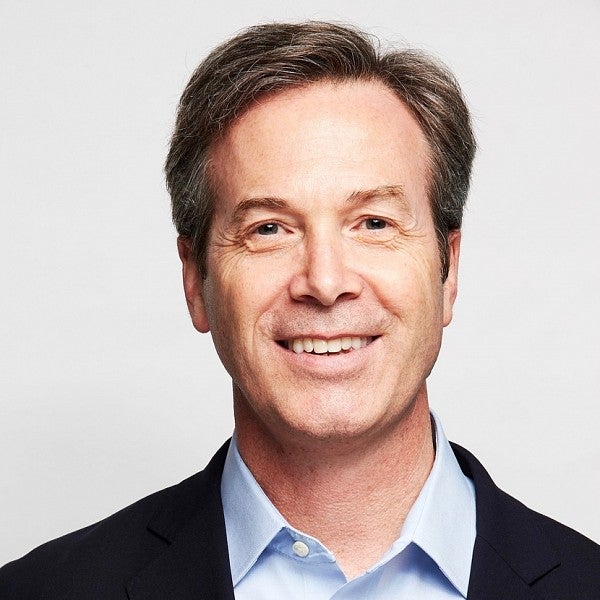
Founder and director of the Yale Program on Climate Change Communication and a senior research scientist at the Yale School of the Environment.
On November 19, 2020, Leiserowitz delivered the 2020-21 Kritikos lecture, “Climate Change in the American Mind” via Zoom. His talk was the first in this year’s Oregon Humanities Center Climate Justice series.
Watch the talk and read our subsequent interview with him below.
Leiserowitz's November 19, 2020 lecture: “Climate Change in the American Mind."
His talk was the first in this year’s Oregon Humanities Center Climate Justice series.
Q&A
What made you choose UO as a place to study the environment?
There's no one discipline that can fully understand environmental problems. They’re natural science problems, they’re social science problems, they’re humanities problems. Right from the very beginning of my graduate education, I was taking classes with world-leading ecocriticism scholars in the English department, or taking classes in sociology, or political science, and so on. And there really just wasn't anywhere else in the country like UO, where environmental studies was woven throughout the entire campus.
It was the chance to study with leading scholars, in all these different disciplines, all set within one of the special places on the planet. I mean, there's a reason why we call the Northwest “ecotopia.” It was just an incredibly vibrant intellectual and physical environment.
Ultimately, one of the things that attracted me was the way that other professors I talked to, at other schools, described the UO. They said, if you go to this other (unnamed) school, for example, it's just much more competitive. You're going to compete for the attention of your professors. It's a much more dog-eat-dog kind of place. Whereas UO was known as a school that supported and nurtured interdisciplinarity, that really encouraged people to grow as independent interdisciplinary scholars. Different people thrive in different types of academic environments - for me, UO was the perfect place to be.
During your master’s and doctoral degrees here, what were some of either your favorite, or some of the strongest learning experiences you had that shaped what you're doing today?
One of the people who I came specifically to study with was Professor Mark Johnson of the philosophy department. He was doing ground-breaking work on the cognitive science of metaphor, and how the metaphors we use are not just poetry, they're not just figures of speech. They're actually central to the way we think. So I was really interested in learning from him how metaphors work to structure human thought, perception and behavior. More specifically–and this is what I focused my master's degree on–what are the metaphors that humanity uses to understand “nature."
As a doctoral student, geography was a wonderful area of study because geography itself is very interdisciplinary with a long tradition of trying to understand the relationship between human beings and the natural world. So that was a natural fit, but I was also able to explore other perspectives that I didn't get in geography. One of which was working with Dr. Paul Slovic, a world-renowned psychologist and one of the founders of the field of risk perception and decision-making. So I was able to learn and integrate the perspectives of cognitive and social psychology to understand these critical environmental issues.
And then Dr. Patty Gwartney over in sociology taught me the field of survey methodology, which is still one of the main methods that I use in my work today, though I've since added additional methods like experiments, modeling, mapping and so on. I feel incredibly lucky that I had exposure to and the chance to learn from world-class scholars in each of these fields that in the end, combined perfectly and really launched me on my subsequent career.
What do you consider to be influencing students today to choose environmentally related fields? What sorts of factors are inspiring students of the future?
There's a growing recognition among the younger generation, and it's getting stronger with each successive generation, of coming to terms with the mess we’re in. They understand the intersecting threats of climate change, biodiversity extinction, food insecurity and other global environmental challenges: water shortages, wildfires, environmental and climate justice concerns. I think these growing threats are leading many young people to say, I want to learn about the environment because this is my future and I want to do what I can to make a difference. I think many students are inspired, not just by the threats, but by the solutions and they want to be part of that.
Looking at everything that's happened over this year, 2020, how do you see public sentiment towards the environment shifting?
At least in the United States, and I think this is probably true in many other countries around the world, these issues have suddenly surged in public priority. So it's not just awareness or even acceptance, increasingly people are moving to action. That didn't start this year, it's been surging for about five years now, but 2020 really kind of accelerated it.
I think there’s a response to the increasing severity of the impacts that we're experiencing, and the sense that time is running out, and yet also that many solutions are already at hand. But what we need is what we call public and political will, in other words, the demand for action. One of the major things that I'm seeing is people of all kinds saying, I want to get involved, I want to do what I can to make a difference.
What is next for you in your work, and what are you working on right now?
We're starting to do a lot more work internationally. We're often working with national governments or other big institutions so we can develop the same kinds of research insights that we have in the United States about public climate change knowledge, risk perceptions, policy support and behavior. This is really important because solving climate change is going to require the coordinated action of every nation - and their people - around the world.
Another ongoing initiative is our national radio program called Climate Connections. We broadcast a new short story about climate change every day on about 650 stations across the country, including several in Oregon — I believe including KRVM, but not KLCC yet (hint, hint).
For all of our fancy technology today - film, television, social media, virtual reality - in the end, the most powerful form of communication humans have developed is the one that we were using back in the Stone Age, huddling around campfires, and that's storytelling. Hearing about other people's experience and learning from and being inspired by their stories.
And that's what we try to do with Climate Connections. We tell the stories and listen to the voices of people. from all walks of life, across the country, who are either experiencing the impacts of climate change right here, right now, or, even more importantly, the stories of people who are rolling up their sleeves to get involved. I've been working on climate change for more than 30 years. But even I had no idea about all the amazing things that people are doing across the country every single day. I just feel very privileged to be able to bring their stories and their voices to a national audience.
Thanks for the interview! But the most important thing to conclude with is just, Go Ducks!